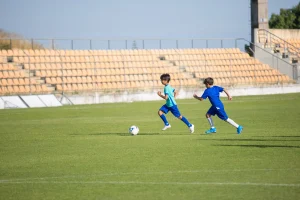
Most sports aches in kids are normal soreness and go away in a day or two. A few are overuse injuries that need rest and a check-up. Fall is a busy season for these because practice ramps up fast across soccer, football, cross country, field hockey, and fall baseball. This handout helps you tell the difference, care for your child at home, and know when to reach out. The goal isn’t to keep kids off the field. It’s to keep them on it all season.
Soreness or something more?
If your child can point to the pain with one finger, it deserves a closer look.
Normal soreness
Time to sit out and check
Achy, in the muscles
Sharp, or in one spot on a bone or joint
Often on both sides
Usually on one side
Gets better once they warm up
Gets worse during activity
Gone in 1 to 2 days
Lasts or keeps coming back for 1 to 2 weeks
Moves normally
Limps, or changes how they run or throw
Fine at rest and at night
Hurts at rest, wakes them at night, or swells
The four we see most in the fall
All four are common, and all four usually heal with rest and a few smart changes.
Osgood-Schlatter
Who: Ages about 10 to 15, often during a growth spurt
Where: Just below the kneecap, sometimes with a tender bump
Watch for: Knee pain after running, jumping or kneeling
Sever's (heel growth plate)
Who: Ages about 8 to 14, common in soccer players in cleats
Where: Back or bottom of the heel
Watch for: Limping or toe-walking after practice; heel hurts when you gently squeeze its sides
Shin splints
Who: Runners, and kids who ramp up fast at the start of a season
Where: Along the inside of the shin
Watch for: Pain that narrows to one spot, hurts to hop, or hurts at night can be a stress fracture: get it checked
Little League elbow
Who: Kids who throw: pitchers, quarterbacks, fielders
Where: Inside of the elbow
Watch for: Any elbow pain while throwing means stop throwing and get it checked
The first week at home
If it seems like overuse and not a sudden injury, start here.
- Back off, but keep moving. Cut down or pause the activity that hurts. Keep them active with something that doesn’t hurt, like biking or swimming.
- Ice the sore spot for 15 to 20 minutes after activity. Put a thin cloth between the ice and the skin.
- Check the gear. Worn-out sneakers, cleats that don’t fit, and a sudden jump in practice time are common causes. Heel cups can help a lot with heel pain.
- Use pain medicine sparingly. Over-the-counter medicine at the dose on the label is fine for a few days. It shouldn’t be what lets them keep playing through pain.
Preventing it next time
- 1 to 2 days off from organized sports every week.
- A few months off from any one sport each year, ideally spread out. Playing different sports helps.
- Watch the weekly hours. A common rule of thumb: no more hours of practice and games per week than your child’s age in years.
- Ramp up slowly at the start of a season, and follow pitch-count limits for young throwers.
When to call or text us
You don’t have to guess or wait. As members, you can reach us directly and we’ll usually see your child quickly. Reach out if:
- They limp or can’t put weight on it.
- There’s swelling, or pain that wakes them at night.
- They can point to one painful spot on a bone.
- A child who throws has elbow or shoulder pain.
- It isn’t better after a week of taking it easy.
– DR. MIKE TREMBLAY, DO